
Sailing Svalbard with Sailing Yacht Florence
What do you do after seven years of tropical trade winds and a 70,000-mile global circumnavigation? For Matt and Amy of Sailing Yacht Florence, the answer was simple: head to the exact opposite. Swapping UV Tec for warm layers, the duo recently navigated their 37ft monohull, Florence through the icy grip of the Arctic Circle toward Svalbard. Testing our new OS1 Ocean System along the way.
From 24-hour daylight to encounters with extraordinary wildlife including beluga whales, polar bears and the “stink” of walrus colonies, we caught up with Matt and Amy to see how they – and their gear – handled the transition from the tropics to the tundra.
1. In our last chat, you called this trip the ‘polar opposite’ of your circumnavigation. Now that you’re back, what stands out as the highlight, and what was the biggest hurdle in getting Florence to the Arctic?
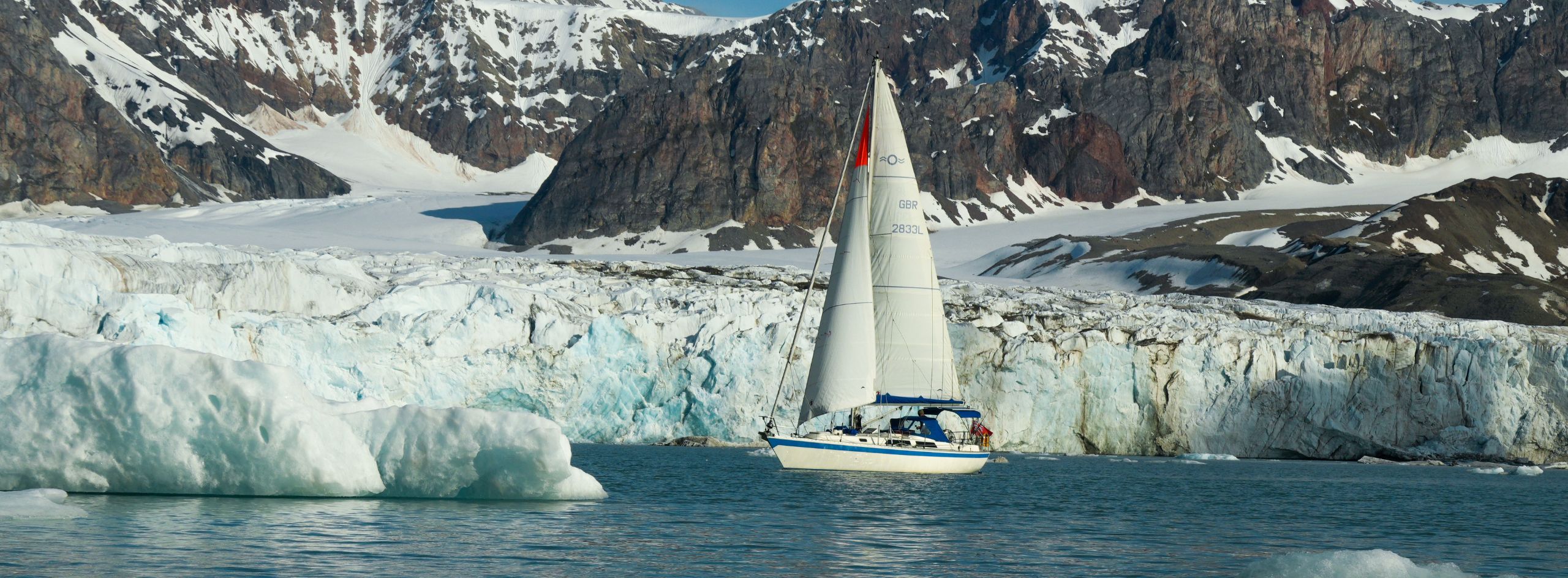
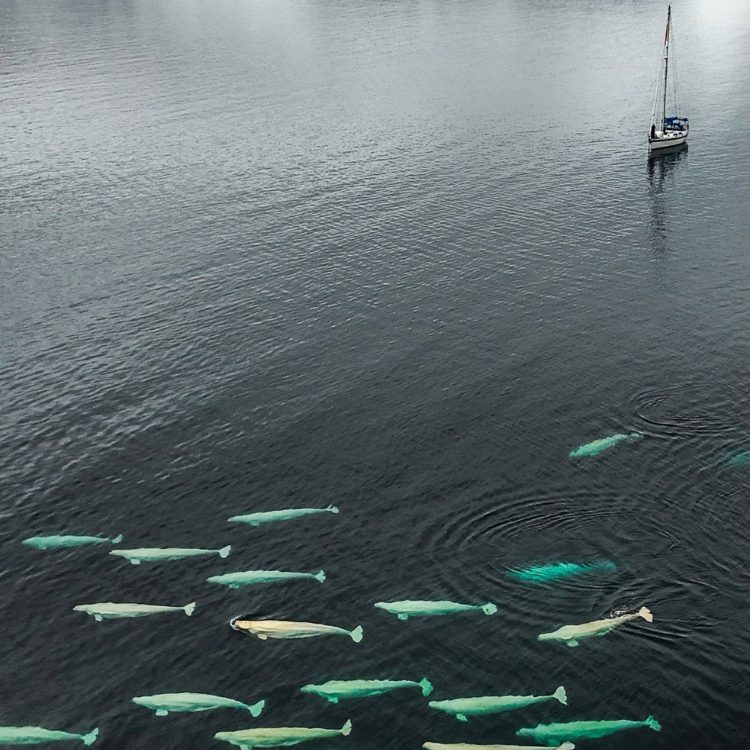
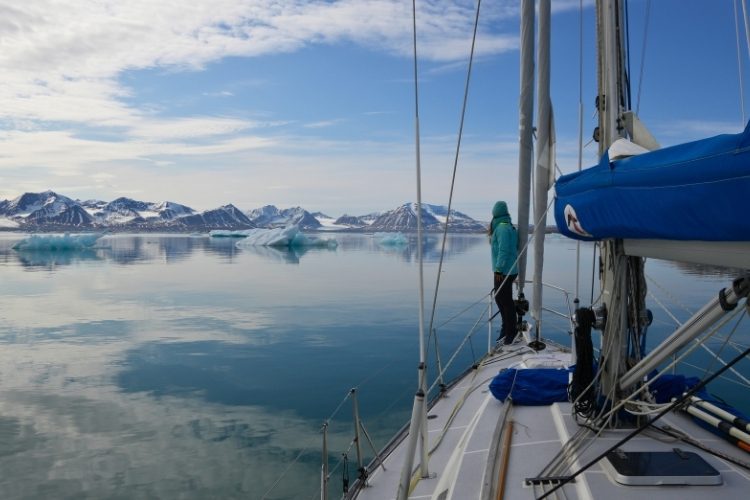
The highlights of this trip are so many that picking just one is nigh on impossible. Svalbard was the jewel in the crown, and taking our 1980’s fibreglass boat Florence up to the face of a glacier whilst surrounded by icebergs and bergy-bits was an experience every bit as awesome as we had hoped for. However the wildlife of Svalbard was also exceptional, at times we felt like we were living inside a wildlife documentary, expecting to hear Sir David Attenborough’s dulcet tones narrating as we were surrounded by 50 beluga whales, smelt the stink of a walrus colony up close or watched Arctic fox cubs frolicking in the summer sun.
Sailing to the Arctic circle and Svalbard from the UK is relatively straight forward, apart from the 2 day hop across the north sea from Scotland, and the 500 mile passage across the open ocean from Norway to Svalbard, the rest can be done in day hops and there are plenty of anchorages to choose from. Probably the biggest challenge was the paperwork. Obtaining the permits and insurance required to sail in the northern Norwegian waters is long winded and difficult, all manageable but you need to start applying 4 or 5 months in advance of setting off.
2. People often think of the Arctic as just cold, but it’s also about the 24-hour daylight and the “bergy bits” of ice. How did your daily routine on board change compared to usual?
Having 24 hours of daylight felt stranger than we thought it would, and it did mess with our heads a bit. We tried to keep to a normal-ish routine of what time to sleep with the aid of good eye masks and blackout window covers, but our body clocks were still confused.
However the lack of darkness was a huge boon for cruising, planning, and making the most of the weather. When we had good weather we made the most of it no matter what the time was, enabling us to see far more on those days. Sometimes packing 2 short passage sails and 2 decent hikes into one very long day, getting back from the 2nd hike at midnight, and then catching up on sleep and video editing when we had bad weather days. We suppose that does explain why our body clocks were a little fried though.
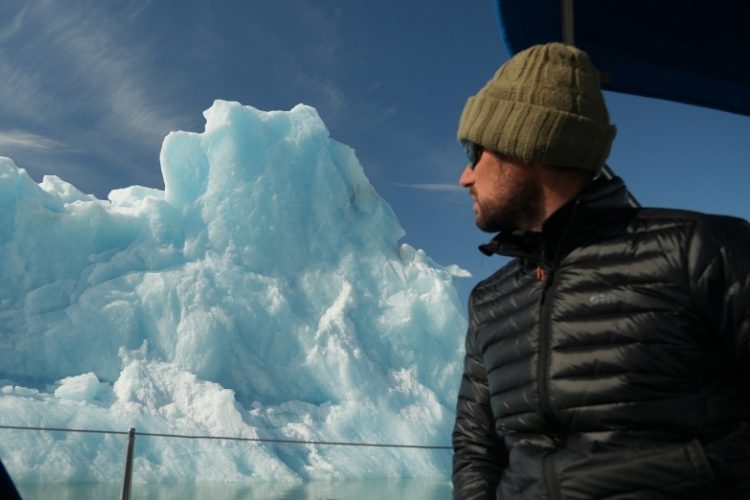
It would be far more worrying to sail in the icy waters in darkness. The bergy-bits were hard enough to spot in daylight and with a standard fibreglass boat we were very nervous about hitting one.
3. In our last chat, you were headed to rent a rifle for polar bear protection. Did you actually have any moments where you spotted a bear from the deck of Florence? Or did you have any other special wildlife encounters?
Carrying a rifle (or at minimum a flare gun) ashore is a legal requirement on Svalbard. Neither of us have ever had a need/want to carry a weapon before and although it never got to the point of feeling comfortable, it always felt like a necessary safety precaution. It seemed most places we visited ashore, we would hear tales from ships or scientific researchers based ashore, that there had been a bear or two, passing through the area we had been walking, a day or sometimes even hours before/after our arrival. The uneven Glacier moraine, rubble like terrain made it very challenging to spot polar bears. Our first week was spent in great excitement, spotting bear after bear as we sailed past the shoreline, that was until we peered through the binoculars or zoomed in on the camera, only for the bear to morph into what was now the millionth white reindeer or patch of snow.
Just when we were beginning to give up all hope of spotting a polar bear, a lone bear wandered along the shore in front of us as we sat eating lunch (luckily safely aboard Florence at anchor). We had been walking ashore just an hour before the bear appeared amongst the Moraine ‘dunes’. After taking a good look and smell in our direction, it disappeared without a trace. It was a brief, awe-inspiring yet sobering encounter that left us wondering how many bears had noticed us sailing by, or hiking ashore, even though we had only spotted this one.
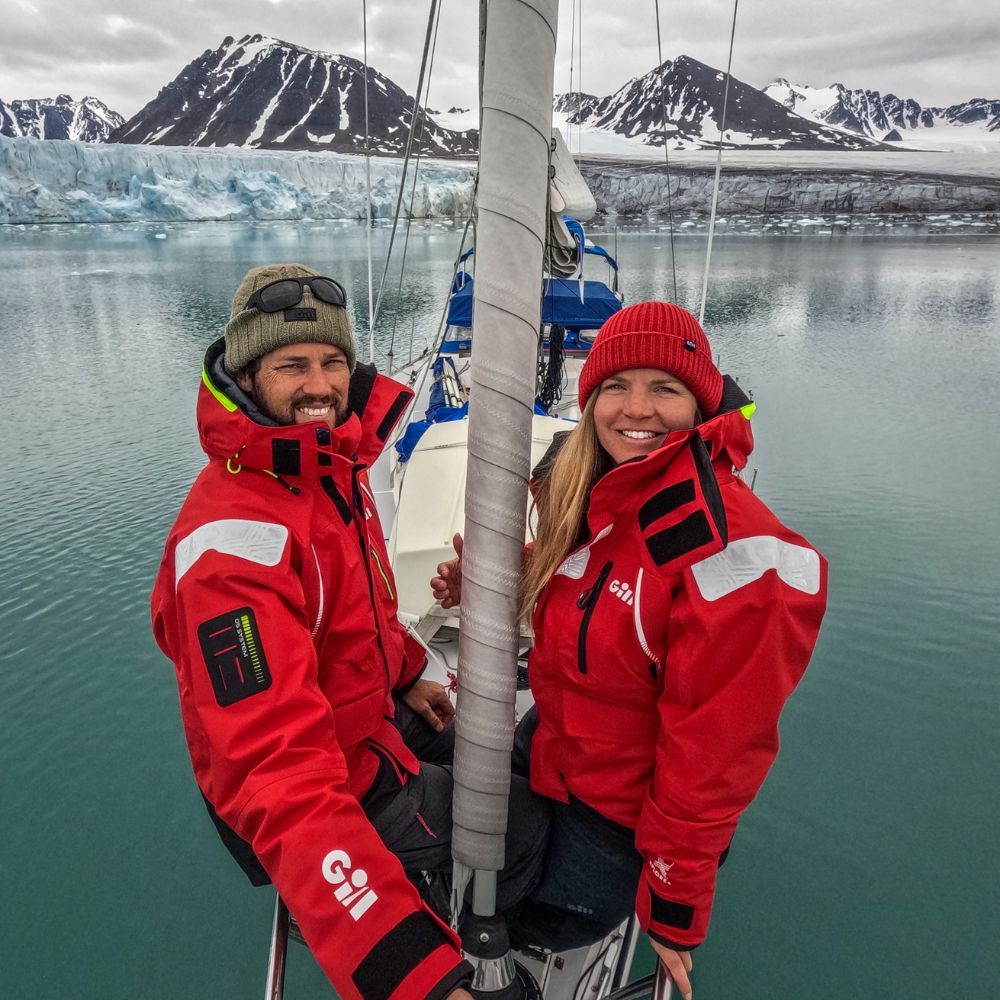
4. Transitioning from light layers to a full ocean system is a big shift. When you first put on the new OS1 Ocean System in those freezing Arctic winds, what was your first impression?
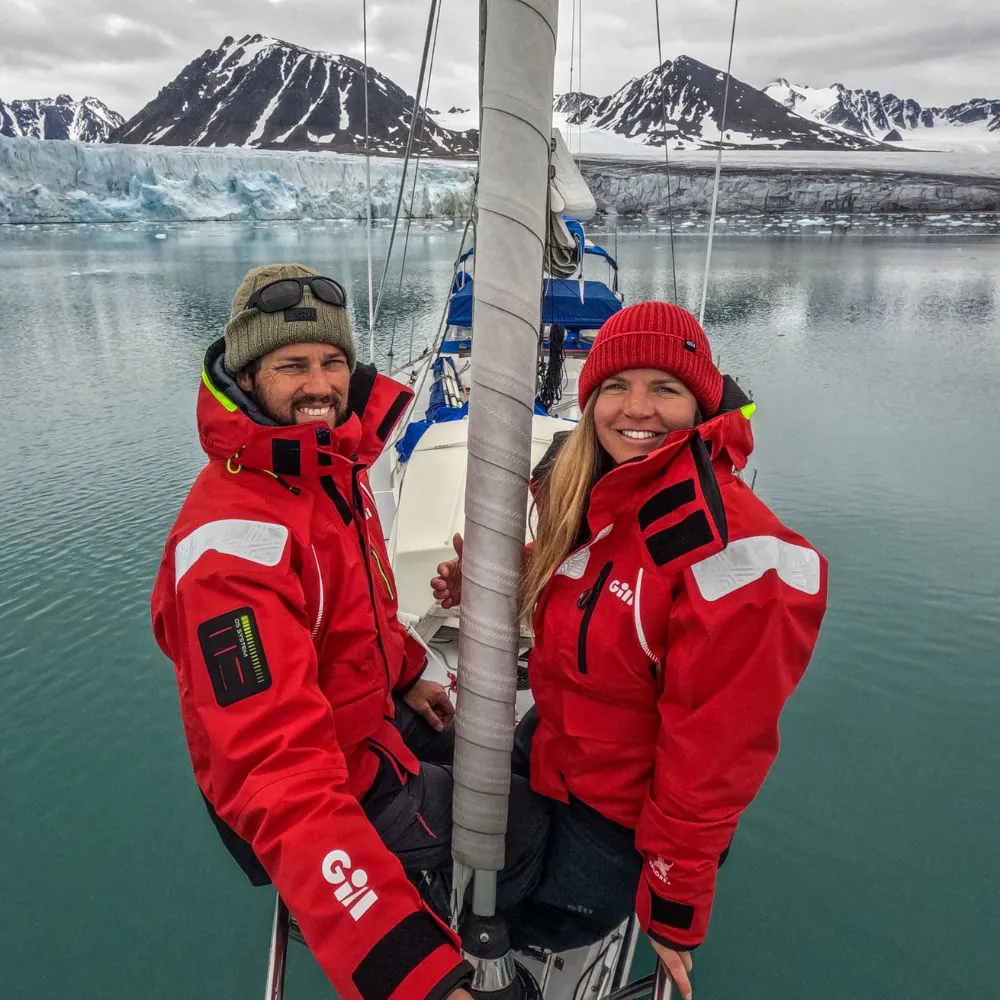
Let’s be honest we are not hardened Arctic explorers, and we first reached for the OS1 kit whilst sailing north up the Irish sea in April right at the start of our trip. We loved it, it just shuts out the wind chill and weather whilst still allowing us to feel that we can move around relatively unencumbered. It was reassuring to know it could keep us warm and dry as we increased the layers underneath when sailing further north.
Making the most of our time in the Arctic meant being on deck to enjoy the views and spot wildlife, without decent kit that could have been a miserable experience. We felt very fortunate to have the right kit for the task. We were warm, dry, and comfortable so we could focus on the experience, rather than worry about what we were wearing.
5. And were there any features of the OS1 you found particularly useful across your trip?
We were very thankful for the snug high collars that we could tuck into away from the bitter wind chill blowing off of the glaciers.
We like the design of the OS1 being an outer shell without a lining because that makes it easier to put on when wearing many layers underneath. This is especially important when trying to get out on deck quickly, either to help with a sail change or to spot that whale breaching alongside.
The fact that it kept us completely dry was important as being on a small boat it would have been very difficult to dry out wet mid-layers onboard.
6. You’ve put the gear through more in a few weeks than most people do in a year. Be honest – how’s did it hold up to the salt, the grit, and the Arctic grind?
The OS1 kit was very waterproof, kept us and our inner layers dry at all times and we felt protected when wearing it. It could now do with a good wash as it has spent 6 months aboard a slightly damp boat, with not a lot of chances to be rinsed with fresh water. With a wash we look forward to wearing it again next season.
Before you left, you told us you’d hold off on giving advice until you’d seen Svalbard for yourselves. So, for the sailors who are now dreaming of the ice – what’s the key piece of advice you’d give and what’s the one thing they must have in their kit bag?
Sailing in higher latitudes is more achievable than you might first think. With careful planning, good preparation, and the right kit, this extreme environment can be not just endured but enjoyed. As for kit bag contents, it’s not about any one thing, it’s about layers, and it is worth having a slightly larger reliable outer shell so you can fit even more layers underneath!
7. You’ve ticked off the Arctic Circle – a massive achievement. Now that Florence has seen the ice, is she getting a well-earned break, or is there another “extreme” destination already on the radar?
Our Arctic trip was to satisfy an itch for something different after our mostly tropical circumnavigation of the world on Florence. Although she has certainly earned a break, a change is as good as a rest right? So this year we will be sailing her to some more countries that we have never been to before.
As for longer term destinations, having now sailed Florence over 70,000 miles in a huge variety of conditions globally, she makes us feel like anywhere is possible and that makes it very difficult to choose.